EV Charger Installation Cost in Vancouver — 2026 Guide
Get an estimate in minutes, no commitments
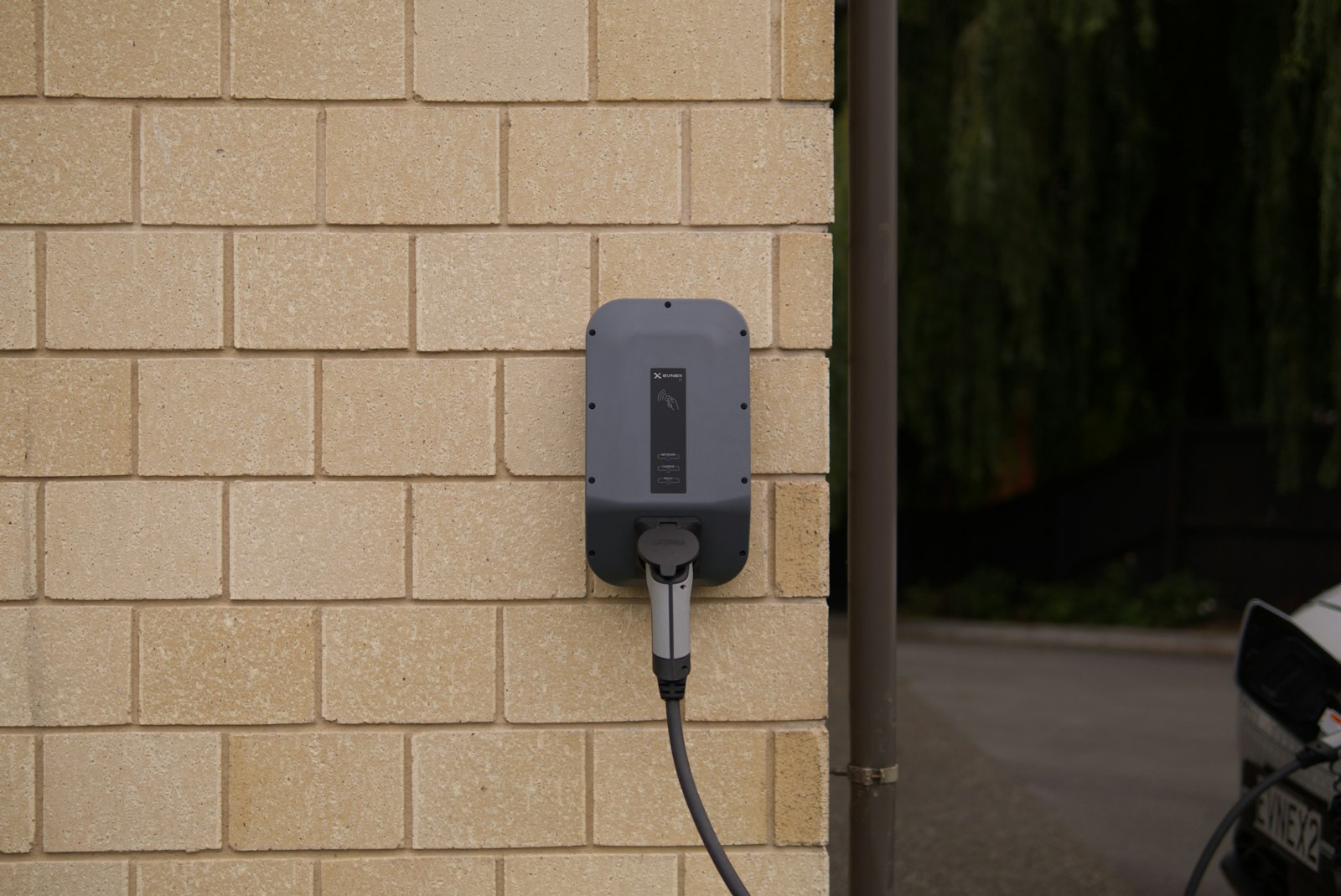
Home EV charger installation in Vancouver runs $1,000-$2,600 for a standard job; a confirmed EV-ready rough-in has a fixed $350 connection before independent items. Here's what drives the cost.
Want a number tailored to your home? Use the calculator on our EV charger installation service page for an itemized Metro Vancouver range.
Could Your Newer Home Already Be EV-Ready?
Possibly—but the year your home was completed is only a screening clue. EV-ready rules are municipal, changed at different times, and usually turn on the development- or building-permit application and the parking covered by the rule. Before pricing the job as a simple connection, confirm the municipality, original permit dates, rule in force for that application, stall type, and the electrical or as-built drawings. Then have a licensed electrician verify the equipment at the actual stall.
EV-ready normally means electrical infrastructure ending at an adjacent energized receptacle or covered outlet/junction box. It does not necessarily mean that an EV charger is installed. In a shared parkade, the outlet may also be served by an EV energy-management or load-sharing system.
If the correct circuit, breaker, capacity, wiring, and energized outlet are already in place at the parking stall, the work may be a charger connection rather than a new circuit run from the panel. A conduit, pull string, unenergized box, incompatible shared system, missing circuit, or outlet that cannot support the selected charger can still require design, wiring, panel, or capacity work.
Metro Vancouver screening dates
| Jurisdiction | Permit/effective screen and parking coverage |
|---|---|
| City of Vancouver | For development permit applications from January 1, 2019, the City says 100% of residential parking stalls, excluding visitor stalls, must be EV-ready. Earlier requirements and limited configurations differed, so verify the permit and drawings. |
| Richmond | The 2017 bylaw applies to new construction not issued a building permit by April 1, 2018, subject to transition provisions for some in-stream multifamily developments. It covered each residential parking space except visitor parking, across new residential buildings and uses. |
| Burnaby | Effective September 1, 2018, 100% of parking spaces in new single-, two-, and multi-family residential buildings required Level 2 infrastructure; the requirement is an energized outlet, not a charger. Even for a detached home, do not infer compliance from age alone—confirm its permits and installed electrical work. |
| New Westminster | From April 1, 2019, new buildings containing at least one residential unit required a Level 2 energized outlet at each residential parking space; visitor stalls and a new secondary suite in an existing home are excluded. Council adopted the requirement on October 1, 2018. |
| Port Moody | The zoning rule covers required parking for new residential units—including detached, semi-detached, apartments, townhouses, and additional dwelling units—with exceptions including visitor, secondary-suite, and parking for existing units. Its transition excludes developments with an authorized development permit or submitted building permit before March 1, 2019. |
| City of North Vancouver | The residential rule is earlier than a 2022 completion-year screen: from June 1, 2019, 100% of parking spaces in new residential buildings required Level 2 infrastructure. From January 1, 2022, the City added coverage for 10% of residential visitor stalls. The rule requires an energized outlet, not the charger. |
These are screening dates, not a promise that a particular stall is ready. Municipal transition rules, later amendments, approved variances, the parking arrangement, and what was actually built can change the answer.
What a simple rough-in connection costs
A confirmed EV-ready rough-in uses the RenoFiz calculator's fixed $350 connection instead of its standard base labour and wiring-route rows. This is the narrow scenario behind an “approximately CAD 300” planning figure; $350 is the approved calculator input, not a universal market price or an all-in quote. The charger unit, permit, any plug-in adjustment, strata or EVEMS requirements, and independently needed panel or capacity work still apply. Use the EV charger installation calculator only after confirming the rough-in is truly usable for the selected charger.
If you own an electric vehicle in Vancouver — or you're planning to buy one — the first question isn't "which car?" It's "how much to install the charger at home?"
Home charging is the most convenient and cost-effective way to power an EV. But installation costs vary dramatically depending on your home's electrical setup, where you want the charger, and whether your panel can handle the load.
With EV adoption accelerating in BC — and provincial and federal rebates continuing to evolve — now is the time to understand exactly what the installation costs and how to get a fair price.
How Much Does EV Charger Installation Cost in Vancouver?
EV charger installation in Vancouver typically runs between $1,000 and $2,600 for a standard installation. Complex installation work can reach $5,000–$8,000 before any electrical-capacity work or service upgrade shown below.
Your home's electrical capacity may add work on top of that price. The amounts below cover electrical-capacity work only: add them to the charger, wiring, permit, and base installation costs. For a range tailored to your home, use our EV charger installation calculator.
60A service
| Your home | Likely electrical work | Add to installation cost |
|---|---|---|
| Any load profile | Upgrade to 200A service | $8,000 |
The calculator does not ask about other electrical loads for a 60A service because the service upgrade applies in every supported case.
100A service
| Your home | Likely electrical work | Add to installation cost |
|---|---|---|
| Few major electric appliances | Install an energy-management device | $3,325 |
| Electric heat, air conditioning, or an electric range | Upgrade to 200A service | $8,000 |
The $3,325 scenario assumes gas heat, no air conditioning, a gas or no range, a gas dryer, and spare breaker space. Without spare breaker space, the capacity work becomes $4,825. An electric dryer follows a less certain calculator path of $0–$8,000, not the guaranteed $8,000 service-upgrade row.
200A service
| Your home | Likely electrical work | Add to installation cost |
|---|---|---|
| No electric heat or pool pump | No capacity upgrade expected | $0 |
| Electric heat or a pool pump | Further assessment may be needed | $0–$8,000 |
The $0 scenario assumes spare breaker space. Without spare breaker space, allow $1,500 for panel-space work.
Here's what drives the rest of the cost:
Charger Type
Level 2 chargers are the standard for home installation. They deliver 30–50 km of range per hour, enough to fully charge most EVs overnight. The unit itself costs $600–$1,000 depending on brand, features (smart/WiFi-enabled, load sharing, amperage), and whether it's hardwired or plug-in.
Level 1 chargers use a standard 120V outlet and don't require installation — but they're painfully slow (5–8 km of range per hour). Not a practical solution for daily use.
Panel Capacity
This is the biggest variable. If your electrical panel has available space for a new 50-amp breaker, installation is straightforward: the electrician runs conduit from the panel to the charger location, installs the breaker, mounts the charger, and tests it.
If your panel is full or doesn't have capacity, you may need a panel upgrade — replacing the existing panel with a larger one or adding a sub-panel. In Vancouver, a 200-amp panel upgrade runs $6,000–$9,000 depending on the complexity and whether the utility (BC Hydro) needs to be involved.
Homes with 60-amp service need a 200-amp service upgrade in the calculator. A 100-amp home may instead use an energy-management device when it has few major competing electrical loads; homes with electric heat, air conditioning, or an electric range follow the 200-amp upgrade path.
Distance from Panel
The farther the charger is from the electrical panel, the more it costs. Cable, conduit, and labour add up quickly:
- Charger mounted on the same wall as the panel: $225–$375 for the run.
- Charger across the house or in a detached garage: $1,000–$2,300 for the run.
- Underground trenching to a detached garage or laneway: $2,400–$4,600.
Permits
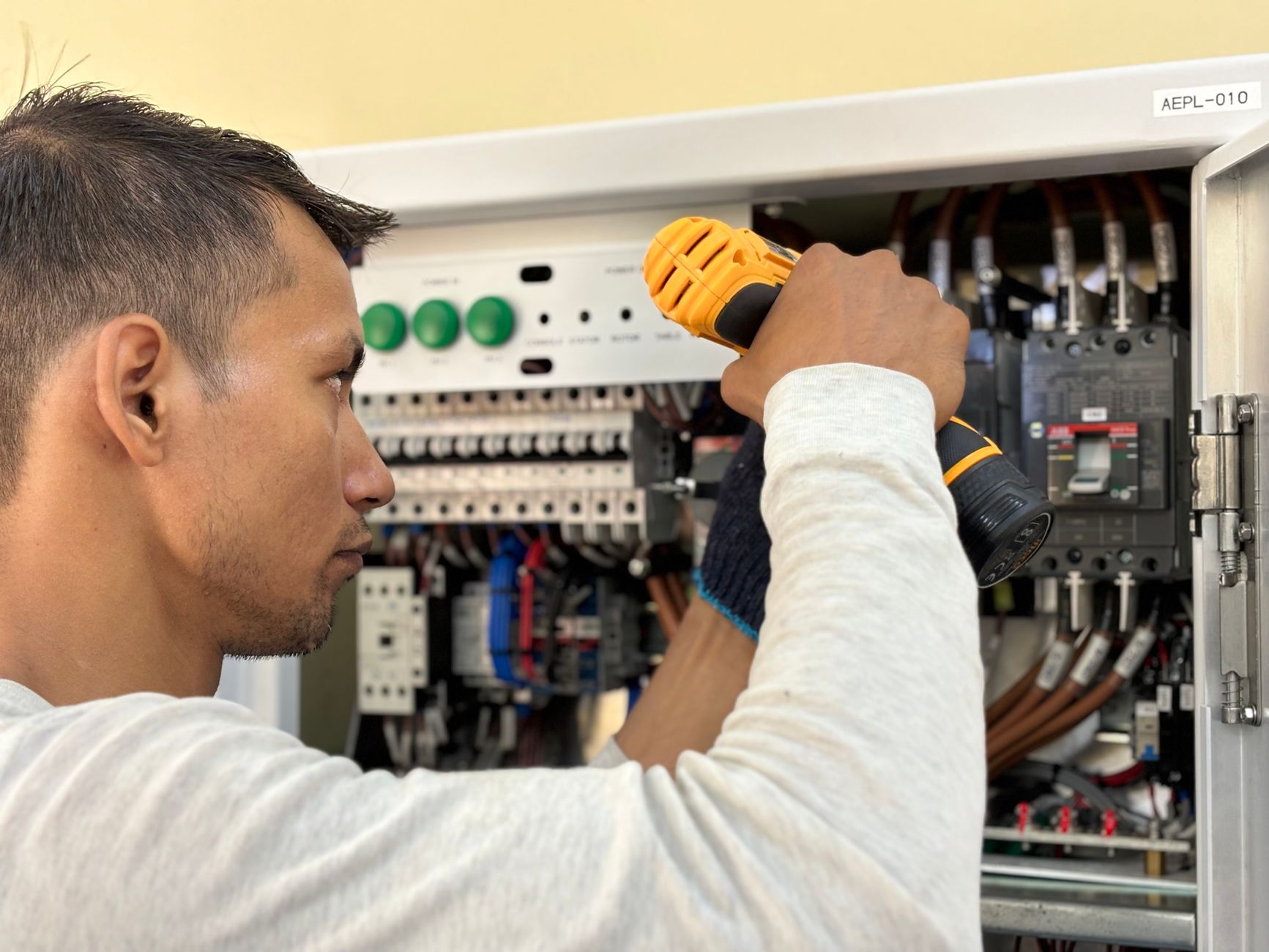
Vancouver requires an electrical permit for EV charger installation. The permit fee is typically $125–$175 and is handled by the electrician. A permit ensures the work is inspected and meets the Canadian Electrical Code — important for insurance and safety.
BC Rebates and Incentives
BC Hydro currently offers a $350 rebate for single-family homeowners who install a qualified Level 2 EV charger. On top of that, you can stack two additional incentives: a $200 rebate for installing an EV power management device (which can help you add an EV charger without upgrading your electrical panel), and a $250 credit for enrolling an eligible smart charger in BC Hydro's Peak Saver program — plus $50 for every season you stay enrolled. Some municipalities also offer local top-up rebates — check your city's program.
The federal government's Zero-Emission Vehicle program previously offered up to $5,000 off the purchase of a new EV and additional incentives for charger installation. Programs change frequently, so verify current availability before budgeting.
The RenoFiz Approach
EV charger installation is a perfect example of a project where a detailed scope prevents surprises. The difference between a $1,500 install and a $5,000 install is almost never about the electrician's rates — it's about your home's existing electrical setup.
Describe your project to Chris, RenoFiz's AI project assistant: What kind of charger are you installing? Where will it be mounted? What's the distance from the panel? Do you know your panel's capacity? Is this a single-family home, condo with a parkade, or laneway house?
Chris builds a line-item estimate: charger unit, breaker, cable and conduit, mounting, permit, labour. If a panel upgrade is needed, that's a separate line item you can see before approving.
You review and approve: The scope and price reflect exactly what your installation requires. No guesswork about panel capacity or hidden trenching costs.
RenoFiz matches you with a vetted electrician: A licensed electrician receives your approved estimate as a shared baseline. They visit to confirm panel location, routing, and site conditions, then finalize.
The result: a fair, transparent price for a job where surprise costs are the norm.
The Honest Truth
EV charger installation is usually simpler than homeowners expect — but it's also an area where unlicensed work is dangerously common. A friend-of-a-friend who "knows electrical" may offer to do it for cash, but unpermitted electrical work can void your home insurance, create safety hazards, and cause problems when you sell.
A licensed electrician with a permit is the only safe option. The cost difference is small. The risk difference is not.
The Bottom Line
The price of an EV charger installation comes down to three things: the charger itself, the panel capacity, and the distance from the panel. Most Vancouver homes fall into the $1,000–$2,600 range for a standard install, with panel upgrades adding $6,000–$9,000 if needed.
BC Hydro rebates can offset some of the cost, and a detailed scope before you start means no surprises about panel upgrades or trenching.
Want a custom estimate for your project?
Describe the work and get a custom estimate of the likely scope and cost in minutes. A local professional confirms the final details before work begins.